
China
There’s something about China that forces you to unlearn everything you thought you knew. It’s not just the language or the scale. The way things move. The speed at which people adapt.
I had to unlearn my perception of China. The people, the culture, the clarity with which they operate. The amount of protein they have in their diets, haha! What struck me most was how self-sufficient, and meritocratic the environment felt. I came in curious, I left humbled. This wasn’t just a trip, it was a privilege. An eye-opener.
I wrote a long tweet sharing my observations from the experience.
Part 1 of 36
I survived 21 days in China, as a newbie with no Mandarin skills. The country's heartbeat is efficiency, and the warmth of its people left a lasting impression on me.
🧵 Here are 21 observations that I didn't know before
Part 2 of 36
The purpose of my visit was to meet smart people building frontier technologies and experience the "future" China is living in!
I visited Beijing, Hangzhou, Shenzhen, Shanghai, and spoke to around 50+ people including cab drivers, students, software engineers, founders, VCs, journalists, lawyers etc
If you are curious about China, take 5 minutes and start reading:
Part 3 of 36
1. It seems to me that "innovation" is an input metric for China, whereas it's an output metric for the US, and "dominance" is an input metric for the US but an output metric for China. Let that sink in.
Part 4 of 36
2. In China, robotaxis are not everywhere but only in very small areas. Drones are not delivering food everywhere; it's just happening in a single vending machine kind of setup. 99.9% of the restaurants have human waiters and human cooks. Planes are still flown by humans. The ground reality is that hype is much more than what's actually implemented.
Part 5 of 36
3. Having said that, the technology that is feasible today is definitely implemented in some part of China; they are not waiting for somebody to do it for them.
Part 6 of 36
4. Women dominate the workforce in China, and it was inspiring to see this everywhere. Coming from India, where women's employment lags behind the global average, this issue resonates deeply with me. In China, women excel in every field imaginable. It's truly remarkable.
Part 7 of 36
5. It is a constant reminder that language is humanity's ultimate invention. Communication between humans and machines, all in Mandarin. When I was using translators, it felt like carrying Type-C to Lightning converters 24/7 everywhere, haha. Different languages make it so inefficient. Even if the education system has English as a subject, they simply don’t prefer English. Period.
Part 8 of 36
It's quite ironic and funny that their keyboards are in English, even though most of them don't know English. The way they type Mandarin is like how we search for emojis on our keyboard. After all, there are 80,000+ characters in Mandarin; fitting them into one keyboard is a great UX challenge.
Part 9 of 36
I felt handicapped many times because without knowing Mandarin, you are half blind but local people are welcoming and patient with foreigners. Many times I struggled to navigate a place or order food, people went out of their way to help. I didn't have any poor experience at all. Without them, I would have given up much sooner.
Part 10 of 36
Everything on the internet is in Mandarin, so the search engine indexing we are used to just completely fails to work. It’s not at all like how the internet works for the rest of the world. It's not the internet but Chinternet, haha. Even DeepSeek search was a makeshift arrangement. It becomes really difficult to search for any useful information online. I had all the local apps installed on a local phone, but it was a real pain to translate each and every text on the screen.
Part 11 of 36
6. No @LumaHQ kind of platform to discover public events. Most of the key information flows through WeChat and private circles. People learn about important information and events through legacy media channels on WeChat.
Part 12 of 36
7. It is a very efficient country. They don’t feel the need to please anyone. So much busy and focused on improving themselves. They know if they are really good at their craft, the world would need them. The efficiency is visible in every touchpoint experience from digital to physical. No distractions and struggles, seamless service everywhere. Note: you can only experience this efficiency completely if you know Mandarin.
Part 13 of 36
There are internet courts in China, and many of the new cases are resolved through written letters, with just one or a few in-person hearings at the end. As a result, China’s courts handle millions annually with fewer judges.
Part 14 of 36
Payments are so smooth and even for a non-Chinese citizen like me, no friction at all. I just added my Indian bank card to AliPay and WeChat, and I was sorted throughout. QR codes everywhere, and instead of the customer scanning the QR code, the merchant does. If you think about it, that is so much more convenient and has a lower failure rate. Also, 7-Elevens have palm-based payment, which is extra cool.
Part 15 of 36
Receiving deliveries is easy with locker systems, both at home or office. Delivery people place parcels in lockers, and you use an app code to retrieve them at your convenience. I wish India had this system, as coordinating with delivery people is a hassle. In the US, packages are left at the door, but this isn't feasible for large countries like China or India.
Part 16 of 36
In many dining spots, traditional order-taking is obsolete. By scanning a WeChat QR code, you place your order, present your code to a machine, and collect your food. Everything revolves around QR codes: booking tickets, flights, hotels, listening to music or even finding a date. WeChat's mini-apps are widely embraced.
It's unusual to find multiple startups offering the same digital service. This trend likely contributes to WeChat's status as a super app. People seem conditioned to have a single option, possibly by design. Replicating a super app in other nations might prove challenging without supportive government policies. Personally, I found relying on WeChat for all my needs incredibly practical.
Part 17 of 36
For just $3, I breezed through VIP security on every domestic flight- just a quick 2-minute pass to skip all queues! This should be the available everywhere.
Part 18 of 36
There are so many EVs on the roads. I can't recall taking a single gas-powered cab, despite having taken over 30 rides. The metro is also super convenient and cheap. There are no human police officers in sight; instead, police robots patrol, and there are around 15 cameras at every stop.
Part 19 of 36
8. The UI/ UX in digital products are poor, with cluttered aesthetics and distracting ads popping up in all apps. The overuse of animals and cartoon characters in brand graphics is prevalent. It's evident that creating excellent digital products isn't prioritised here, unlike the
Part 20 of 36
9. Quite meritocratic policies by the government. Some folks told me that if your business reaches $30M+ revenue, the government gives you rent-free land to set up a manufacturing plant/office and also an interest-free loan of $50M on top.
Part 21 of 36
10. It appears that average individuals in China generally exhibit greater intelligence, awareness, and maturity compared to those in India. Taxi drivers discuss Fortune 500 firms, while people in Shenzhen organize gatherings to practice English, debating subjects such as the
Part 22 of 36
11. It seems to me that the government is adept at creating hype, sharing what they want the world to know, and concealing what they don't. They control every piece of information that the public can access. The government places board members in key companies and is involved in
Part 23 of 36
I visited the offices of popular startups like Unitree, BrainCo, and Even Realities and met the founders. The DeepSeek office had three tall security guards outside, so I couldn't get in :/
The Unitree G1 weighs 35 kg. Its hardware is genuinely impressive, but it lacks
Part 24 of 36
I met BCI (Brain-Computer Interface) startups that provide EEG-based headbands to schools. Teachers can access students' attention levels in real time. If a student isn't attentive, they recommend activities like walking or meditation instead.
Schools host tournaments where kids
Part 25 of 36
14. I visited Tsinghua University, China's equivalent of MIT and Harvard, and met some interesting students. I'd like to visit again and spend more time there. Unfortunately, language barriers limited our exchange of insights and ideas. Next time.
Part 26 of 36
The scale of China is immense, resulting in a vast array of products. The abundance of workforce means there's a lot of variability in quality and type of products, but it also increases the chances of finding exactly what you need more than anywhere else. From an outsider's
Part 27 of 36
I also got connected to a bunch of incredible folks in the hardware and manufacturing supply chain, each with fascinating stories and expertise. Unfortunately, I couldn't find the time to visit the factories this time around. Next time!
Part 28 of 36
15. What I have learned so far is that there's not much difference between Chinese parenting and ours. The main distinction is their embrace of competitiveness and sincerity in making money. Parents take parenting classes and are not as overprotective with their children as
Part 29 of 36
16. "Power lives in shadows" was a quote I kept hearing from people. Some say it's Sun Tzu being applied everywhere. One thing is for sure, If you want to do anything long-term with Chinese people, you have to learn Mandarin, their culture, and their traditions. Otherwise,
Part 30 of 36
19. Birth rates are declining, and it's quite visible on the ground. I wouldn't be surprised if China legalizes genetic babies and artificial wombs as a last resort to solve the population crisis. IMO, it's not a question of if, but when. I wonder how quickly the world will
Part 31 of 36
20. I've never encountered such an efficient blend of modern technology and infrastructure with ancient values and culture. The infrastructure and technology are cutting-edge, while traditions, language, decision-making, values, and food remain deeply rooted in the past.
Part 32 of 36
21. While I was there, Ne Zha 2 was released and earned $1 billion in a week, breaking all world records. Some say this animated film and its character embody many Chinese values. The people speak one language and share one religion (guess: money). The government sets a single
Part 33 of 36
Airbnb is banned in China, but I managed to find local homestays through a local Airbnb startup. All the places I stayed were excellent, and I highly recommend them.
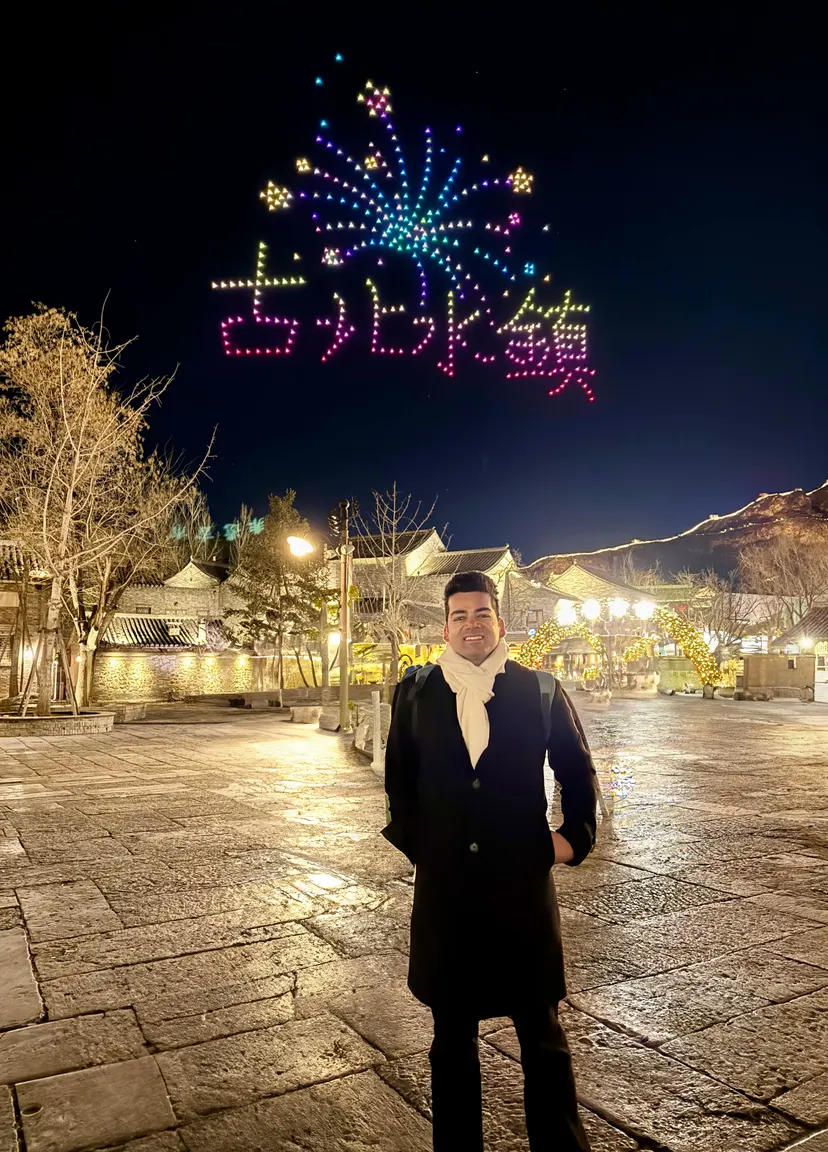
During my trip, I enjoyed great food, visited the Great Wall, tried the bullet train, and saw drone shows. The
Part 34 of 36
I'm still amazed that, at a cost of living similar to Indian tier 1 cities, you can enjoy a lifestyle in China that's comparable to San Francisco. My brain is still not able to digest it
Part 35 of 36
Ok ok, here's just one story out of many that showcases the incredible kindness of the Chinese people. I slept through my entire flight from Beijing to Shenzhen, and guess what the airline staff did? Instead of waking me or skipping my meal, they packed it up nicely and left a
Part 36 of 36
Just 3 weeks in, and I'm already plotting my next visit this year. Hope you enjoyed the read and found it helpful! Ofc, feel free to hmu if you're planning to visit China anytime soon
No comments yet. Start the conversation.